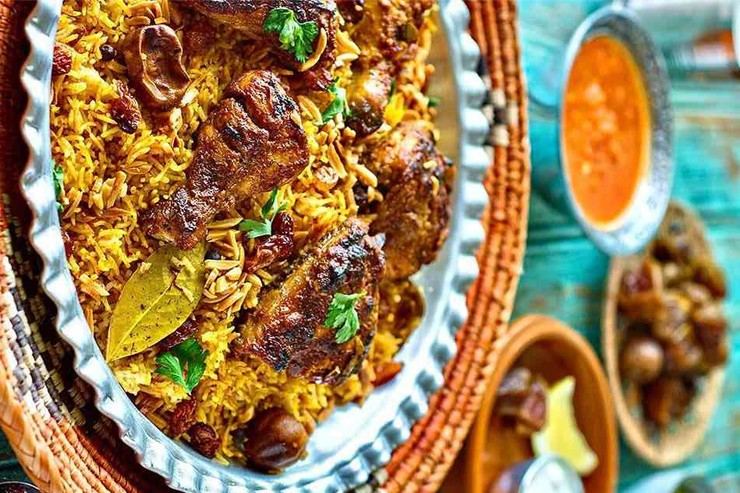

If you want to experience the absolute heights of Persian culinary artistry, look no further than Gheymeh Nesar. Originating from the historical city of Qazvin, this dish is traditionally reserved for weddings, holidays, and grand celebrations—and it is easy to see why.
Serving this dish is like presenting a treasure chest at the dinner table. It features layers of fluffy, buttery basmati rice and richly spiced, tender cubes of meat, completely blanketed in a dazzling “jeweled” topping of ruby-red barberries, emerald pistachios, golden almonds, and sweet orange peel. Fragrant with saffron, cardamom, and a whisper of rose water, it is an unforgettable sensory experience.
Here is how to create this majestic Persian centerpiece in your own kitchen.
What You’ll Need
The Meat Stew
- 500g lamb or beef (cut into small, bite-sized cubes)
- 1 large yellow onion (finely diced)
- 2 tablespoons tomato paste
- 1 teaspoon turmeric
- 1/2 teaspoon ground cinnamon
- 1/2 teaspoon ground cardamom
- 2 tablespoons brewed liquid saffron (see tips)
- Cooking oil or ghee
- Salt and black pepper to taste
The Rice Base
- 3 cups high-quality long-grain basmati rice (washed until clear and soaked for at least 1 hour)
- Salt (for boiling the rice)
- 2-3 tablespoons butter or ghee (for the crispy Tahdig crust)
The “Jeweled” Topping
- 1/2 cup dried barberries (zereshk), washed and soaked in cold water for 15 minutes
- 1/3 cup slivered almonds (optionally soaked in a little rose water)
- 1/3 cup slivered pistachios
- 1/3 cup candied slivered orange peel
- 2 tablespoons butter
- 1 tablespoon sugar
- 1 tablespoon rose water
- 2 tablespoons brewed liquid saffron
How to Make It
- Cook the spiced meat: In a pot, heat a splash of oil and sauté the finely diced onion until golden. Add your small cubes of lamb or beef and the turmeric, browning the meat on all sides. Stir in the tomato paste and cook for a couple of minutes until the raw tomato smell cooks off and the oil turns a deep red. Pour in just enough water to cover the meat, add the cinnamon, bring to a boil, then cover and simmer on low for 1.5 to 2 hours until the meat is incredibly tender.
- Reduce and flavor the sauce: Once the meat is tender, the liquid should have reduced into a thick, rich sauce. If it’s too watery, take the lid off and let it boil down. Stir in the cardamom, salt, pepper, and 2 tablespoons of brewed saffron. Let it simmer for 5 more minutes, then turn off the heat.
- Parboil the rice: Bring a large pot of heavily salted water to a rolling boil. Drain your soaked basmati rice and add it to the pot. Boil for about 5 to 7 minutes. You want the rice grains to lengthen and feel soft on the outside but still have a firm bite in the center. Drain the rice completely and rinse it gently with cold water to stop the cooking process.
- Steam the rice (and make the Tahdig): Melt your butter or ghee in the bottom of a large, non-stick pot over medium heat. You can lay thin flatbread (like lavash) or potato slices at the bottom for your crust, or just use the rice itself. Gently pile your parboiled rice into the pot, shaping it into a pyramid. Poke a few holes in the rice with a wooden spoon handle to let steam escape. Wrap the pot’s lid in a clean kitchen towel, place it on tightly, and cook on low heat for 45-50 minutes.
- Prepare the jewels: While the rice is steaming, melt 2 tablespoons of butter in a small skillet over low heat. Drain your barberries and add them to the pan along with the sugar. Sauté for just a minute (barberries burn very easily!). Stir in the slivered almonds, pistachios, candied orange peel, rose water, and saffron. Toss everything together for another minute until fragrant and glistening, then remove from the heat.
- Assemble the platter: When the rice is done, gently scoop a few spatulas of the plain white rice onto a large serving platter. Layer all of your rich meat and sauce over the rice. Cover the meat entirely with the rest of the white rice. Take a little bit of the rice and mix it with the jeweled topping and saffron in a separate bowl, then cascade this breathtaking, colorful mixture all over the top of the platter.
Tips for the Perfect Gheymeh Nesar
- Brewing saffron like a pro: Never just throw dry saffron threads into a dish! To get the most color and flavor, grind a generous pinch of saffron threads into a powder with a tiny pinch of sugar. Place the powder in a small glass and add an ice cube. As the ice melts at room temperature, it extracts a shockingly vibrant, deep crimson color from the saffron.
- Taming the orange peel: If you cannot find pre-candied orange peel, you can make your own. Slice fresh orange peel (avoiding the white pith) into very thin slivers. Boil them in water for 5 minutes, then drain and rinse with cold water. Repeat this boiling and rinsing process three times to completely remove the bitterness before sautéing them with your other jewels.
- Don’t forget the Tahdig: The crispy, golden crust at the bottom of the rice pot (Tahdig) is the most coveted part of any Persian meal. Serve it on a separate small plate alongside the Gheymeh Nesar so it stays perfectly crunchy!